

All agents want one thing.
More enquiries.
But getting more enquiries is only useful if they are the right enquiries for your estate agency.
You might need buyers for your listings, homeowners booking valuations or landlords looking for a managing agent. Those are different goals, and your marketing should reflect that.
Start by deciding which type of lead you need. Then choose the channels, message and follow-up that support it.
Here are seven estate agent lead generation channels to consider, and how to build a mix that avoids relying on one source.
Estate agent lead generation channels compared
| Channel | Lead types it can support | What you need first | What to expect |
|---|---|---|---|
| Organic social media | Buyer interest, seller and landlord conversations | Useful content, a relevant offer and a DM follow-up process | Builds familiarity over time. Specific posts can also prompt direct enquiries. |
| Email and CRM marketing | Past valuation leads, landlords and existing applicants | Accurate segments, appropriate marketing permissions and someone responsible for replies | Can reconnect you with existing contacts. Results depend on the data, message and timing. |
| SEO | Seller valuations, landlord enquiries and buyer registrations | Pages matched to local searches, a usable website and enquiry tracking | Takes time to develop. Different searches attract different types of enquiry. |
| Referrals and partnerships | Seller and landlord introductions, relocation enquiries | Relevant relationships and a clear introduction process | Introductions may arrive with existing trust, but volume is difficult to predict. |
| Local and offline marketing | Local homeowner and landlord interest | A defined area, a useful offer and a trackable response route | Responses depend on the message, distribution and timing. |
| Google Ads | Valuation requests, landlord enquiries or buyer searches | Relevant search demand, budget, a suitable landing page and tracking | Can reach active searchers. The searches you target influence the enquiries you receive. |
| Meta Ads | Buyer registrations, seller and landlord enquiries | A clear offer, suitable creative, compliant setup and follow-up | Can generate responses before someone searches for an agent. Readiness varies. |
These channels can support several goals. The important part is making each campaign clear about who it is for and what you want them to do.
1. Organic social media
Organic social media can build familiarity with your agency and give people a direct reason to get in touch.
The long-term part matters.
A homeowner may follow your agency for months before planning a move. During that time, they see your team, local knowledge, properties and results. When they decide to sell, your agency already feels familiar.
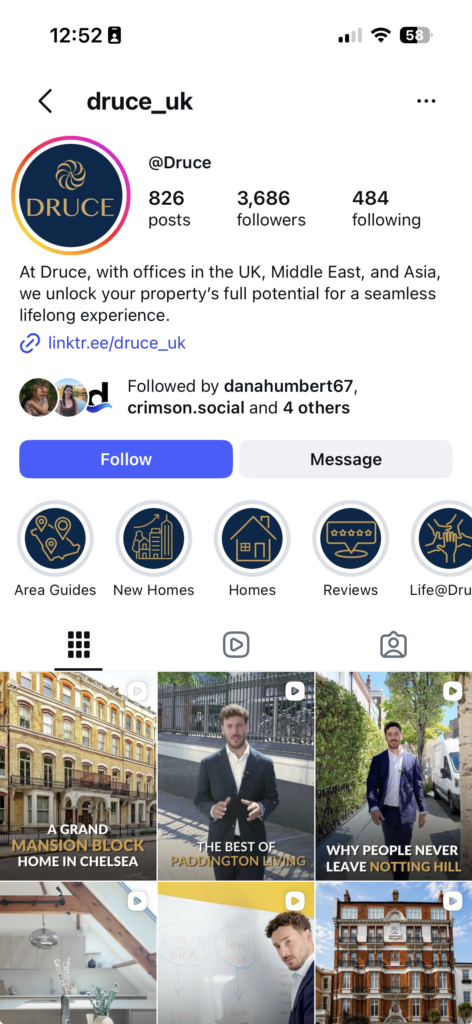
That gives you a reason to post more than listings. Agent-led videos, local market updates, seller advice, area guides and client stories can all help people understand what your agency offers.
Give people a reason to respond
You can also use individual posts to start conversations.
For example, share a local seller’s checklist and invite people to comment “SELLER” to receive it. A DM can deliver the resource and offer a relevant next step, such as asking whether they would like to discuss a valuation.
The process could look like this:
- Publish a useful post. Explain what the resource helps someone do.
- Invite a keyword comment. Make it clear what they will receive.
- Deliver the resource by DM. A suitable automation can help handle requests.
- Offer a relevant next step. Ask whether they need further help and follow up appropriately.
The resource should match the person you want to reach. A viewing checklist is aimed at buyers. A guide to preparing a home for sale is more relevant to prospective sellers.
Record each stage separately: resource requested, conversation started, qualified enquiry and appointment booked.
Someone asking for a guide has shown interest, but has not necessarily asked for a valuation. Delivering a requested resource should also be kept separate from permission for ongoing marketing.
See how we developed Druce’s organic social media strategy in our Druce case study.
Best for: Building local familiarity and creating conversations around useful content.
What you need: Consistent content, a relevant offer and someone responsible for responding. Follower growth alone will not tell you whether the activity is generating business.
2. Email and CRM marketing
Before paying to reach new people, look at the contacts already in your CRM.
Past applicants, former vendors, landlords and old valuation leads may need an agent again. The opportunity is to send something relevant to their situation.
An old valuation enquiry might benefit from an updated local market report. An existing landlord may be interested in a discussion about their rental property. A buyer needs information about suitable homes.
Sending all three the same message makes that harder.
Start with a clearly defined group, check the information you hold and choose one useful reason to contact them. Give replies to a named person so enquiries do not sit unanswered.
Keep the campaign source and outcome in your CRM. That lets you see whether the communication led to a conversation, valuation appointment or instruction.
Check the applicable marketing permissions before sending. The ICO’s guidance on electronic mail marketing explains consent and the conditions for relying on the soft opt-in.
Best for: Reconnecting with existing contacts and developing future opportunities.
What you need: Accurate records, relevant segments, appropriate permissions and consistent follow-up.
3. SEO
SEO helps your agency become discoverable when people search for property services and advice.
The page you create should match the enquiry you want.
A local sales page can explain your service to prospective sellers. A lettings-management page should answer landlords’ questions. Property listings and area guides can help buyers research their options.
For an estate agency, useful SEO work can include:
- Clear sales and lettings service pages.
- Location pages with information specific to the area.
- Seller and landlord guides.
- Accurate Google Business Profile information.
- Internal links that help visitors find the relevant service and next step.
Avoid treating every website visit as equally valuable. A person reading general moving advice is at a different stage from someone requesting a valuation.
Track the enquiries generated by your pages as well as their traffic.
SEO also needs time. Google explains that changes can take anything from hours to several months to affect search results. That is guidance about changes appearing in search, not a promised timeframe for generating leads.
Best for: Developing a long-term source of relevant search traffic and enquiries.
What you need: Useful pages, a technically accessible website and ongoing work. Organic clicks have no advertising charge, but creating and improving the content still costs time and money.
4. Referrals and partnerships
A recommendation can introduce your agency before you have had to explain why someone should trust it.
Past clients, solicitors, relocation firms and other local businesses may know people who need an estate agent.
Make those relationships practical. Explain the areas you cover, the services you provide and the situations where an introduction would be useful.
You could collaborate on a local guide, contribute to an event or create useful content together.
For client referrals, make the next step straightforward. A satisfied seller should know how to introduce someone to your team.
Record where introductions come from and what happens next. Over time, that helps you understand which relationships are creating relevant opportunities.
Best for: Warm introductions and strengthening your local network.
What you need: Relationships you maintain and a clear introduction process. Lead volume can be unpredictable.
5. Local and offline marketing
Estate agency remains a local business.
Boards, direct mail, events, sponsorships and shopfronts can all put your agency in front of people in the area you serve.
Give the activity a clear purpose and a way to respond.
For example, distribute a postcard offering a guide to selling in your local area. Include a QR code and a short website address leading to a dedicated page.
Let people read the guide and offer a relevant next step, such as requesting a valuation.
Track:
- Visits from the postcard link.
- Valuation requests.
- Appointments booked.
- Instructions attributed to the campaign.
Add the campaign source to your CRM so you can follow enquiries through the process.
This will not capture every way the postcard influences someone, but it gives you a clearer view of the responses it generates.
Best for: Building recognition within a defined local area.
What you need: A useful message, considered distribution and a measurable response route. Printing and distribution costs should be included when reviewing results.

6. Google Ads
Google Ads can put your agency in front of people searching for a relevant service.
But the search matters.
Someone searching for a house valuation is expressing a different need from someone looking for flats for sale. A broader search such as “estate agents in Clapham” does not tell you whether that person is a buyer, seller or landlord.
Build the campaign around the type of enquiry you want.
For a seller campaign, align the search terms, advert and landing page around valuations or selling a property. For landlords, use messaging and a destination that explain your lettings service.
Make the next step clear and record whether enquiries become suitable appointments.
Best for: Reaching people actively searching for the service you offer.
What you need: Relevant local demand, budget, a suitable landing page and working tracking. Review search terms and enquiry quality so you can identify wasted spend.
7. Meta Ads
Meta Ads can introduce an offer to people browsing Facebook and Instagram.
The offer determines what kind of response you are asking for.
A development brochure campaign aims to attract prospective buyers. A valuation campaign is aimed at homeowners considering selling. A landlord guide can start conversations about lettings or management.
Keep those goals separate when reviewing results.
Someone requesting property details is a buyer enquiry. Someone downloading a local market report has shown interest in the information. Neither should automatically be counted as a qualified seller lead.
Give each campaign one clear next step, then follow up in a way that matches what the person requested.
Make sure the campaign also follows the advertising requirements that apply to housing and any other regulated content.
Best for: Introducing relevant property offers and starting conversations with potential clients.
What you need: Clear creative, a suitable offer, compliant campaign settings and a reliable response process. The number of form submissions alone does not establish lead quality.
Which estate agent lead generation channel should you start with?
The best lead generation for estate agents depends on the opportunities already available to the business.
You do not need to launch all seven channels at once.
If you already have an established CRM
Start by reviewing the database.
Look for relevant groups such as past valuation enquiries or landlord contacts. Check the data and marketing permissions, then test a campaign with a clear reason to respond.
Measure qualified conversations, valuation appointments and instructions.
If you need to build local visibility
Focus on consistent local content and useful website pages.
Show your team’s knowledge, answer questions buyers and sellers actually ask, and give people a reason to engage. A relevant resource can help turn some of that interest into a conversation.
Monitor visibility, but also record the enquiries and appointments that follow.
If you need valuation opportunities soon
Review existing CRM opportunities and assess local search demand.
A focused Google Ads campaign may be worth testing where the budget, search demand and landing page support it. Meta can also be tested with a clear seller offer and a defined follow-up process.
Neither guarantees immediate appointments. Judge the activity by the qualified seller enquiries and valuations it produces.
How should you measure lead quality?
Agree what a useful enquiry looks like before comparing channels.
For a seller campaign, that might mean a homeowner with a property in your service area who wants to discuss selling or a valuation.
For a landlord campaign, it might mean someone responsible for a rental property who is considering the service you provide.
For buyers, the criteria will relate to the properties available and their requirements.
Record resource requests separately from qualified enquiries, then track the next stages.
Appointment rate is the number of enquiries that result in a booked appointment divided by the number of enquiries in the same group, multiplied by 100.
Cost per qualified enquiry is the campaign cost divided by the qualified enquiries attributed to that campaign. State whether your cost includes advertising spend alone or also management, production and other costs.
Track booked appointments, attended appointments and instructions separately. Use consistent definitions and allow comparable time for follow-up when assessing different channels.
A campaign that generates more form submissions is not necessarily generating more business.
Want to generate more leads for your estate agency?
Start with the type of opportunity your agency needs, then build the message, channel and follow-up around it.
Crimson Social helps estate agents connect social media, paid advertising and search with measurable enquiries.
If you want to identify where your next seller, landlord or buyer enquiries could come from, speak to the Crimson team.