
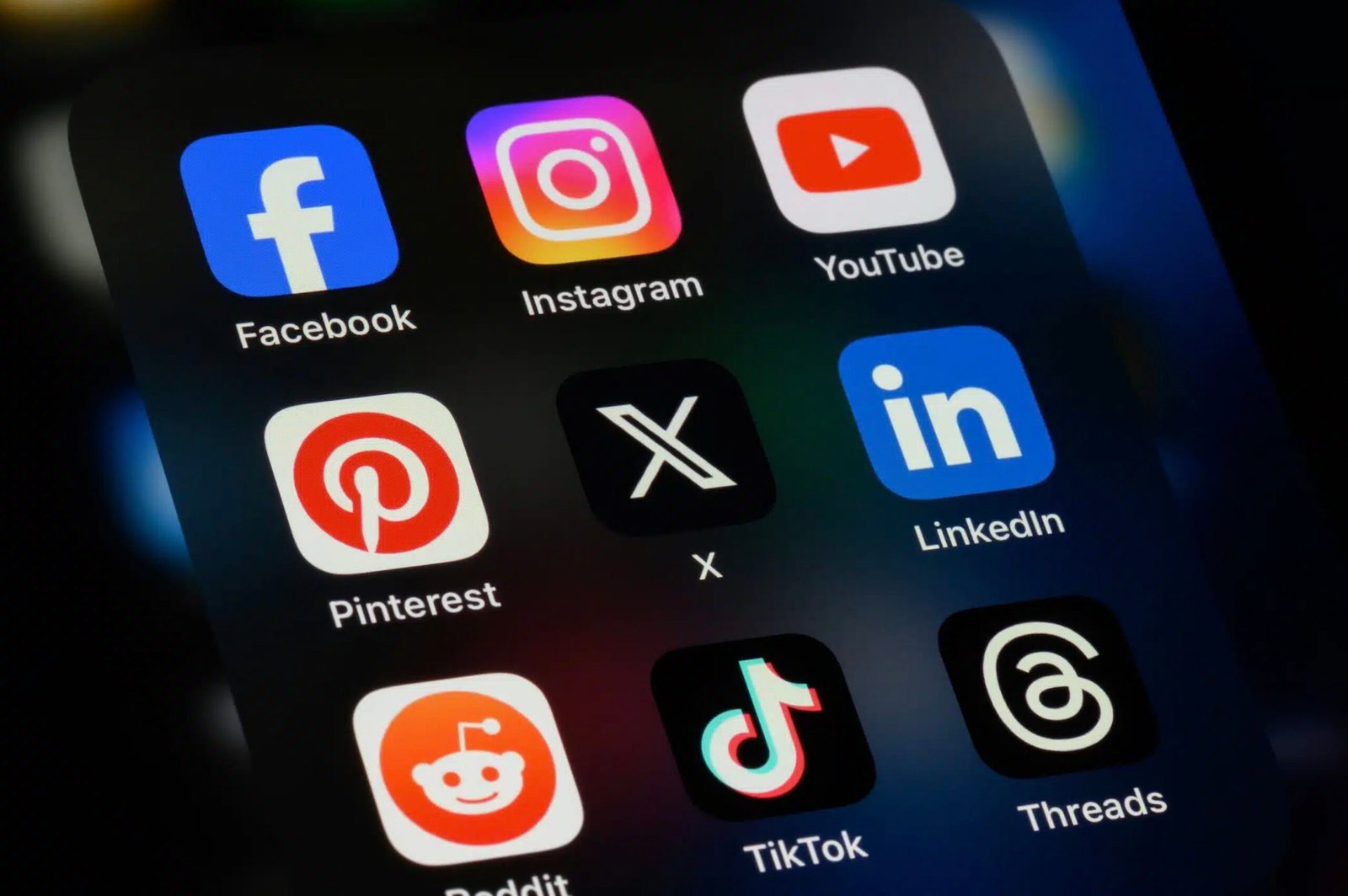
Choosing the best social media for estate agents starts with knowing what you want it to achieve. More visibility in your local area? More buyer enquiries? More conversations with homeowners thinking about selling?
At Crimson Social, we usually recommend Instagram first. Property is visual, and Instagram gives an agency space to showcase properties, introduce its people and share local knowledge.
Facebook sits alongside it, particularly when we’re planning paid advertising. TikTok, YouTube and LinkedIn can all be worthwhile, but we would usually establish a clear role for Instagram and Facebook before expanding further.
Your social media strategy should reflect your target audience, business priorities and capacity to keep creating content.
Why we recommend Instagram for estate agents
A property listing gives someone the price, location and number of bedrooms. Instagram can help you show how the home feels, what’s around the corner and who they would be dealing with.
That gives estate agents plenty to work with:
Property tours and standout features.
Local businesses, parks and neighbourhood recommendations.
Answers to questions buyers and sellers regularly ask.
Client testimonials and stories behind completed sales.
Market observations and introductions to the team.
Instagram also has a substantial UK audience. Ofcom’s Online Nation 2025 report found that it reached 78% of UK online adults in May 2025. That demonstrates the platform’s scale, although it doesn’t tell you how many people in your particular market will see your content.
Our recommendation is to create an account someone would want to follow even when they aren’t actively looking for a property.
A homeowner might have no reason to enquire about your latest listing. They could still be interested in your explanation of local asking prices, a new restaurant opening or what buyers are asking about their neighbourhood.
Those are the people you may want to speak to when they eventually decide to sell.
Give your content a clear purpose
We would build a social media marketing strategy around three questions:
What will make relevant local people pay attention?
What will help them understand and trust your agency?
What should an interested viewer do next?
Instagram Reels could introduce a property or answer a seller’s question. A carousel could explain the steps involved in buying a first home. Stories could show what your team is working on and invite questions.
The format should follow the message.
The same applies to the call to action. A property tour might invite viewing enquiries, while an area guide could encourage someone to start a conversation through direct messages.
Not every post needs to ask for business. But your social media presence should make it clear what you do, where you operate and how someone can contact you.
Our Instagram management for estate agents connects those elements through content planning, production and account management.
Instagram vs Facebook for estate agents
We would usually consider Instagram and Facebook together, rather than assume an agency has to choose one.
Instagram is our usual starting point for visual content and introducing the agency’s properties, people and local area. For Facebook, we would assess how local updates, property content, customer stories and community activity contribute to the agency’s objectives.
Facebook’s audience remains substantial. Ofcom reported that Facebook and Messenger together reached 93% of UK online adults in May 2025. That is a combined figure, not a measure of Facebook’s feed alone.
We wouldn’t make the decision using a simple assumption that Instagram is for buyers and Facebook is for sellers. Your audience, content and actual enquiries should inform the approach.
It is also important to separate organic activity from advertising. A quiet Facebook page does not, by itself, establish whether a paid campaign will perform well.
For paid campaigns, we assess Facebook and Instagram against the objective and the quality of the enquiries coming through. The agency owner’s preferred social platform shouldn’t decide where the advertising budget goes.
Organic social media and paid advertising need different plans
Choosing a platform is only part of the decision. You also need to decide what role organic content and paid advertising will play.
For organic social media, we would focus on building a recognisable presence, demonstrating local knowledge and creating opportunities for conversations. Content should give people reasons to remember your agency and build trust in the team.
For paid advertising, we would start with a specific objective. That might be buyer registrations for a development, landlord enquiries or requests for a valuation.
The campaign then needs an appropriate offer, relevant creative and a straightforward route to enquire.
For example, our published Haus Properties case study reports 565 buyer leads from Facebook and Instagram advertising over three months, using £8,900 in Meta ad spend. Those were buyer enquiries for a development, not seller valuation leads, and the outcome is specific to that campaign.
The lesson is to connect the advertising to a defined audience and enquiry journey, then assess what happens after someone submits their details.
Our Meta Ads service for estate agents covers that process, including campaign strategy, creative, landing pages and optimisation.
Is TikTok for estate agents worth the effort?
TikTok can be worth testing when your team has a clear video concept and the capacity to develop it.
We would consider agent-led property tours, neighbourhood observations and straightforward answers to property questions. The content should give viewers a reason to watch, rather than simply announce that another property is available.
Before adding TikTok to your marketing strategy, decide what you want it to contribute.
Are you developing an agent’s personal brand? Introducing an area to prospective buyers? Testing a different style of property video?
We wouldn’t make TikTok the first priority simply because a competitor has had a widely viewed post. For an agency still establishing its content process, our usual recommendation would be to build consistency on Instagram first, then test additional channels with a clear objective.
When does YouTube for estate agents make sense?
We would consider YouTube when the subject deserves more time than a short property clip.
Potential uses include detailed neighbourhood guides, longer property walkthroughs and explanations of the buying or selling process.
For example, an area guide could explore transport, housing types, amenities and the questions people ask when considering a move. A video for first-time buyers could explain the stages between starting a search and collecting the keys.
The practical question is whether your team can produce video content that justifies someone spending several minutes watching. A longer runtime needs useful detail, a clear structure and a reason to keep going.
YouTube may suit an agency with an established presenter or a strong library of property and local-area footage. We would give it a defined production plan rather than treat it as another account that needs filling.
Where does LinkedIn for estate agents fit?
We would give LinkedIn a different role from Instagram.
For an agency looking to develop relationships with developers, investors, business owners or referral partners, it may deserve a place in the plan.
Our suggested content would centre on the people running the business: their experience, market observations, projects and professional relationships.
An agency director could explain a challenge they helped resolve, share an observation about their local market or discuss how the business approaches property marketing.
If the immediate priority is generating residential buyer enquiries, we would usually investigate Instagram and Facebook first. If professional introductions and partnerships are central to the business, LinkedIn may deserve more attention.
How to choose the best social media platforms for your agency
The best social media platforms for estate agents are the ones that have a clear role in the business and receive enough attention to fulfil it.
We would use the following as a starting point:
| Your priority | Where we would start |
|---|---|
| Build a visual presence for your agency, properties and people | |
| Test paid campaigns for a defined enquiry objective | Facebook and Instagram |
| Develop additional short-form video concepts | Consider TikTok once production is consistent |
| Publish detailed property and neighbourhood videos | Consider YouTube |
| Build professional relationships and partnerships | Consider LinkedIn |
These are starting recommendations, not guarantees. Your existing audience, local community, content and results should influence the final decision.
Before opening another account, ask whether your current channels have a clear plan. Who is responsible for creating content? Who responds to messages? What happens when someone enquires?
Those questions belong in the platform decision because they determine how much work your team can realistically support.
Measure what happens after someone watches
Views and engagement can help you understand which content attracts attention. We would also want to know whether that attention leads to useful conversations and business opportunities.
Depending on the objective, track:
Relevant direct messages and enquiries.
Valuations or viewings booked.
Whether enquiries are contactable and suitable.
Instructions or sales recorded by the team.
Advertising, production and social media management costs.
A buyer enquiry and a seller valuation request are different outcomes. Report them separately so you can assess whether the activity supports your priorities.
Ask new clients how they heard about you, too. Their answers can add context that a platform report alone may miss.
Where should your agency start?
For most estate agencies we speak to, Instagram is our first recommendation, with Facebook alongside it and paid campaigns considered around specific objectives.
We would expand into TikTok, YouTube or LinkedIn when there is a clear reason and enough capacity to produce useful content consistently.
If you need help choosing that mix, explore our Instagram management and Facebook and Instagram advertising services. We’ll help you build a plan around your agency, your market and the enquiries you want to generate.